If you’ve spent any time with generative AI, you know the “One-Hit Wonder” frustration. You spend forty minutes tweaking a prompt, you finally get a character that looks exactly like the vision in your head, a perfect 10/10, and then you try to generate a second image.
Suddenly, her face changes. Her hair color is slightly off. Her body type shifts. Even if you use the same “seed” number, the moment you change the setting from a “bedroom” to a “beach,” the AI loses the plot.
 A high-fidelity character portrait showcasing the unique “Visual Blueprint” that allows for 10/10 consistency across sessions.
In the world of NSFW AI, this is the ultimate barrier to immersive creativity. Most platforms are “disposable” – you make one image, look at it, and move on. But as we move through 2026, the industry is shifting toward Character Persistence. We are moving beyond the simple “text-to-image” box and into the era of the Visual Blueprint.
The Problem with “Generic” AI Generators
Most NSFW image sites today are just “wrappers.” They rent a basic, censored API from a big tech company like Google or OpenAI, slap a few filters on it, and call it a day. Because these base models are designed to be “safe” and “general,” they struggle with the two things adult creators care about most: Anatomical Accuracy and Identity Consistency.
When a model is generic, it treats every prompt as a brand-new roll of the dice. It doesn’t “remember” who your character is because it doesn’t have a dedicated architecture for identity. To solve this, the technology had to evolve into a multi-layered system.
1. The Model Marriage: Why Z-Image and SDXL are Better Together
The highest-quality renders in 2026 aren’t coming from a single AI model, but from a “handshake” between two different architectures. This is the approach pioneered by the technical team at MyBabes.ai, and it’s the blueprint for the future of the industry.
- The Logic Brain (Z-Image): This is a custom-tuned, high-speed model designed specifically for Prompt Adherence. If you ask for a specific, complex position or a niche kink, Z-Image handles the “spatial logic.” It ensures that limbs are in the right place and that the composition matches the text.
- The Beauty Brain (SDXL): Once the logic is set, the system passes the data to a high-parameter SDXL (Stable Diffusion XL) layer. This model handles the “aesthetic”—the skin textures, the way light diffuses through fabric, and the photorealistic “finish” that makes a 2K render feel real.
By splitting the task, you avoid the “deformed” look that happens when a single, overwhelmed model tries to handle both complex anatomy and high-end lighting at the same time.
2. The Breakthrough: What is a Visual Blueprint?
The “secret sauce” for professional creators isn’t a better prompt; it’s the Visual Blueprint. Think of a Blueprint as a digital DNA file. Instead of just relying on a “Seed” (which is just a random starting point for pixels), a Blueprint locks the Latent Coordinates of a character’s face and body.
When you use this technology, you aren’t just generating an image of “a girl.” You are calling up a persistent identity. This means you can take that same character and put her in a roleplay chat, a video clip, or a hundred different image generations, and she will remain 100% recognizable.
To see how these layers work in a live environment, professional creators are moving toward this NSFW AI Image Generator to lock their character’s DNA before they even start prompting for outfits or settings. By establishing this “identity anchor,” you stop fighting the AI and start directing it.
 A technical showcase of the Z-Image + SDXL dual-model architecture, highlighting superior anatomical accuracy.
3. High-Fidelity Rendering: The 2K Upscaling Standard
We have officially reached the point where “standard definition” AI is unacceptable. In 2026, the benchmark for professional content is Native 2K Upscaling.
However, there is a massive difference between upscaling and refining:
- Simple upscaling just makes the image bigger, often resulting in “blocky” or “smooth” skin that looks like plastic.
- AI refinement: This is what high-end platforms like MyBabes.ai utilize. During the upscale process, a secondary AI pass “paints” in the details that were too small for the original render. It adds skin pores, fine stray hairs, the subtle texture of lace, and realistic moisture.
This level of detail is what transforms an “AI picture” into a piece of digital art. It’s the difference between a thumbnail and a masterpiece that holds up on a full-sized monitor.
4. The “Remix” revolution and prompt transparency
For a long time, the best AI prompts were kept secret by “prompt engineers.” But the community is moving toward a Transparency Model. The “Explore” section of modern platforms has become a massive library of blueprints. By using the Remix feature, a new user can see exactly how a pro-level creator built a character. They can see the “Mods” used, the model weights, and the prompt structure.
This doesn’t just make it easier to create; it creates a “standardized language” for AI art. When you can see the blueprint, you can learn how to manipulate the latent space yourself. This community-driven learning is why the quality of NSFW AI images has improved more in the last six months than in the previous three years.
5. Control over creativity: unrestricted and uncensored
The final piece of the puzzle is freedom. The biggest names in AI are currently in a “race to the bottom” to see who can add the most restrictive filters. These filters don’t just stop “bad” content; they break the AI’s ability to understand human anatomy and intimacy.
The move toward independent, fine-tuned models is about Artistic Integrity. By removing the arbitrary filters that major corporations impose, creators can finally achieve 1:1 prompt adherence. If you want to explore a specific, niche fantasy with surgical precision, you need a model that hasn’t been “lobotomized” by safety training.
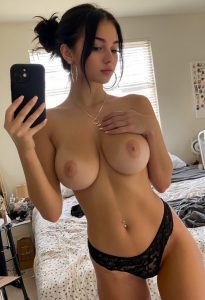
A character render in a complex environment, proving that identity is maintained even as the setting shifts.
The Bottom Line
The era of simply clicking “generate” and relying on chance is fading. Advances such as dual-model architectures (Z-Image + SDXL), persistent visual blueprints, and native 2K upscaling have made AI a more reliable tool for high-end digital creation.
These developments allow for greater consistency across outputs and more control over results, whether for extended roleplay scenarios or experimentation within creative galleries. Don’t settle for disposable AI—start building your blueprint, the tools are finally here to match imagination.